How can you make money trading meme coins without becoming exit liquidity?
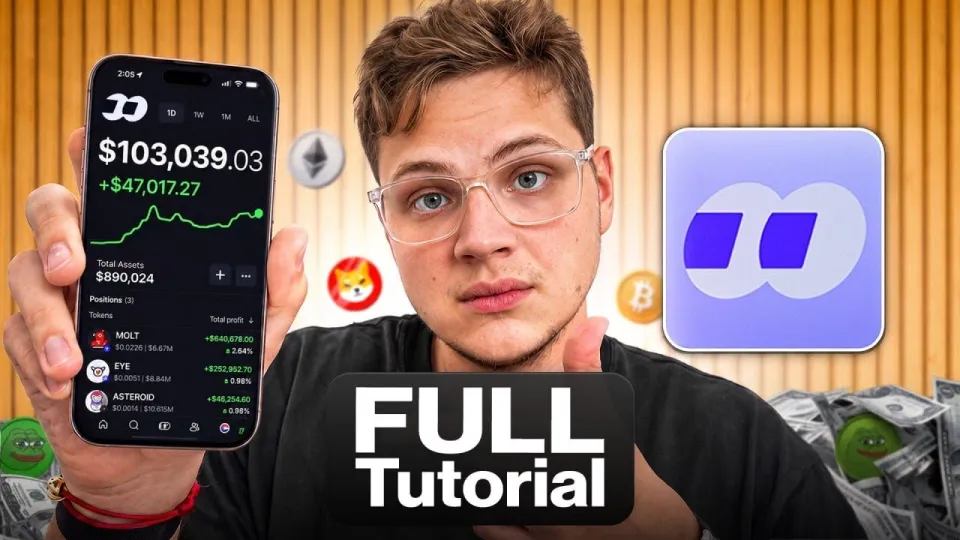
Video: How To Make Money Trading Memecoins (fomo app tutorial)
Need articles like this for your video? They help promote it on YouTube and Google — order them in the Telegram bot @sat_sit_bot. It writes articles around your video, embeds the video and publishes them on popular niche websites (no ads). Free trial — 50 articles.
· based on the channel Orangie Web3
Meme coin trading can make money, but only for traders who treat it as a fast, negative-sum game of timing rather than an investment: profit comes from selling a highly volatile token to someone at a higher price than you paid, so position sizing and exits matter more than the entry. The tools — social trading apps, wallet trackers and copy-trade feeds — shorten the path from idea to order, but they do not remove the risk. A practical starting point is a social trading platform such as Fomo, where you can register and follow wallets, the app demonstrated in the Orangie Web3 tutorial.
What a meme coin actually is and why people trade it
A meme coin is a cryptocurrency with no promised cash flow, product or governance rights; its price is driven almost entirely by attention, liquidity and the order flow of other traders. That definition explains both the appeal and the danger. On Solana, where most of this activity happens, anyone can launch a token in minutes, and the supply is usually concentrated in a handful of wallets at launch.
Traders are attracted by the asymmetry: a small position can multiply several times within hours. The same structure means a small position can go to near zero just as fast. Unlike a stock, there is no earnings report, no valuation floor and no obligation for anyone to buy from you. What exists is a pool of liquidity — usually a token/SOL pair on a decentralized exchange — and the price is simply the ratio at which that pool trades.
That is why experienced traders talk about the "greater fool" dynamic rather than fundamentals. Your exit is another participant's entry, and the only question is whether you are early or late in the queue.
How copy trading on Fomo works and where the lag bites
Fomo is a social trading app that lets users follow other wallets and mirror their trades, which is exactly the workflow shown in the Orangie Web3 walkthrough. The appeal is obvious: instead of scanning new launches yourself, you watch what profitable-looking accounts buy and let the app execute the same trade.
The catch is timing, and it is structural rather than a bug. Skilled traders frequently build a position from a separate wallet before they buy on the wallet the public follows — by the time a copy trade fires, the price has already moved. Followers then become the exit liquidity that makes the leader's trade profitable. This is the single most common objection raised by viewers of the tutorial, and it is correct.
A realistic use of a copy-trade feed is therefore not blind mirroring but research:
- Open the leader's history and check whether they bought before or after the public wallet entry.
- Compare the price at their entry with the current price before you confirm.
- Treat every mirrored trade as a full-loss risk, not as a signal with a guaranteed edge.
- Use price alerts where available — the most requested missing feature under the video — so you exit on your own terms instead of watching a chart.
A repeatable process for sizing and exiting meme coin trades
The difference between traders who survive a cycle and those who do not is rarely the entry; it is the size of the bet and the discipline of the exit. Meme coins are not a place for a large share of a portfolio, because a total loss is a normal outcome rather than a tail event.
A workable routine looks like this:
- Decide the maximum you are willing to lose on the trade before you look at the chart. A common rule is a small single-digit percentage of the trading stack per position.
- Check liquidity and holder distribution. A pool with thin liquidity means your own sell order moves the price against you.
- Plan the exit in advance: sell a portion on the first strong move, move the rest to a break-even stop, and leave only a small runner if you believe in continuation.
- Keep a written log of entries, exits and reasons. Without it, every outcome feels like luck.
- Assume slippage and fees on both sides; on fast Solana launches they can quietly eat a large share of a small gain.
The viewers' experience reflects this: one trader described reloading a wallet with about $90 after being drained, making roughly $30 and then giving part of it back. That is a typical curve — the profit is real, but so is the drawdown, and only sizing keeps it survivable.
Common questions and doubts from new meme coin traders
The questions that come up most often under meme coin tutorials are about safety, timing and whether the whole thing is a scam. None of them have comforting answers, but each has a practical one.
"Is it too late to copy this trade?" Usually yes, if the leader is already up. Check the leader's entry price against the current one; if the move has already happened, the trade is no longer the same trade.
"How do I avoid getting my wallet drained?" Never sign approvals you do not understand, keep trading funds in a separate wallet from long-term holdings, and treat unsolicited tokens in your wallet as bait rather than a gift.
"Do I need a price alert?" Yes, or a pre-set exit order. Watching charts manually is how small gains turn into losses.
"Can meme coins be a reliable income?" For a very small number of full-time traders, sometimes; for everyone else they are a high-risk speculative activity, and the base rate of losing money is high.
Why the culture around meme coins matters for your results
Meme coins are a cultural market before they are a financial one, and understanding the joke is part of reading the chart. Tokens spread through communities, influencers and shared references; a coin with a recognisable meme and an active community can hold attention longer than a technically identical launch with no story.
That does not make culture a substitute for risk management, but it explains why some launches run for weeks and others die in hours. It also explains the community angle in the tutorial's comments, where viewers describe the format as a way to onboard newcomers and make the space feel less intimidating. The practical takeaway is to watch where attention is actually flowing — social volume, holder growth, exchange listings — rather than trusting a single influencer's call.
Useful links
- Fomo trading platform — registration and social trading
- Community chat: https://discord.gg/memecoins
- Author's Instagram: https://www.instagram.com/orangieyt/
Final thoughts on making money with meme coins
Meme coin trading can pay, but it rewards process over conviction: small positions, pre-planned exits, scepticism about copy-trade feeds and a clear-eyed acceptance that most launches end near zero. The Fomo walkthrough published by Orangie Web3 is a useful starting point because it shows the actual mechanics of following wallets and executing trades, while the comment section supplies the counterweight — lagging entries, drained wallets and the demand for price alerts. Use the tools to shorten your workflow, not to outsource your judgement. If you want to test the workflow described here, you can sign up on Fomo through this link and start with a position size you can afford to lose entirely.
Key takeaways
- Meme coins are high-volatility tokens with no cash flow, so profit comes only from selling to someone at a higher price than you paid.
- Fomo is a social trading platform where users follow wallets and copy trades; sign-up via https://fomo.family/r/orangie
- Copy trading usually lags: large traders often buy from a separate wallet first, so followers enter at a worse price.
- Most viewers' top request under the Orangie Web3 tutorial was price alerts — a sign that manual exits matter more than entries.
- Practical risk rule: size each meme coin bet so a full loss is survivable, and take partial profit on the way up.
Source: How To Make Money Trading Memecoins (fomo app tutorial) · Markdown version
Questions & answers
Can you actually make money trading meme coins?
Yes, but only by selling to another buyer at a higher price — there is no cash flow behind the token. A small minority of disciplined traders profit consistently; most participants lose money, especially when they copy entries that have already moved. Treat it as high-risk speculation with strict position sizing.
Why does copy trading on Fomo often lose money?
Because the trade you copy has usually already been executed by the leader, sometimes from a separate wallet used to build the position first. By the time your order fills, the price is higher and you become the exit liquidity. Always compare the leader's entry price with the current market price before confirming.
How much should I put into a single meme coin?
Only an amount you can lose completely without changing your finances — commonly a small single-digit percentage of your trading stack per position. Thin liquidity on new Solana launches means your own sell order can move the price, so large positions are hard to exit cleanly.
What is the biggest missing feature in social trading apps?
Price alerts. Viewers of the Orangie Web3 tutorial repeatedly asked for them, because manual chart-watching is how profits turn into losses. Until alerts or pre-set exits are available, set your own reminder levels and sell in portions on the way up.